
昔は浴室を家の中に造らなかったそうです。理由は浴室の四方が外気に触れていたほうがいいからです。家の中に浴室を造ると浴室の暖かい空気は冷たい壁の方へ引っ張られるので一緒に蒸気も引っ張られて、壁の中や天上に湿気が回る原因となります。恐ろしいのはこの壁を境にした温度差によって「壁内結露」が起こることです。浴室は本来、家の中にあるべきものではないのです。ですが浴室だけ家の外にあるというのはちょっと現代の住宅では考えられませんよねえ? Long ago, people often did not build bathrooms inside the house. The idea was that it is better when the bathroom’s surrounding walls can “breathe” and face the outside air. If you place a bathroom deep inside the house, warm humid air is pulled toward colder walls; the steam follows and can spread moisture into wall cavities and the ceiling. What is truly scary is “condensation inside the wall,” caused by temperature differences across the wall. In that sense, a bathroom is not something that naturally belongs in the middle of a house. Still, having the bathroom completely outside is unrealistic for modern homes, isn’t it?
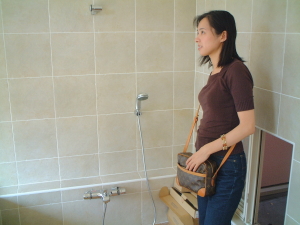
それではどうすれば良いのかと言うと、浴室を家の角に配置して最低でも壁の2面、可能であれば中庭を造って3面を外気に面するようにすることです。カオリの別荘の浴室は、家の角に配置して2面を外気に面するようにしました。さらに浴室は高湿度であることから、壁はすべてタイル貼りにして目地に抗菌目地を使用したタイル貼りにして、仕上げに撥水性向上、防カビ、防汚対策として浴室全体にシリコンコーティングを施し、メンテナンスの手間を軽くします。水栓金具もステンレス製、扉の取っ手はできれば樹脂製にして錆びにくい仕様にします。浴室内は滑りにくい床材を使い、手すりも付けます。浴槽はできるだけまたぎやすい形状にして、身体よりも下に手を伸ばすことで眼圧が圧迫されて起こる網膜剥離や脳内出血を予防するとともに、不注意による落下の危険性も無くします。 So what can we do? One approach is to place the bathroom at a corner of the house so that at least two walls face the outside air. If possible, you can even create a small courtyard so that three sides face outside. In Kaori’s vacation house, the bathroom is set at a corner, exposing two sides. Because bathrooms are high-humidity spaces, the walls are fully tiled, with antibacterial grout. For finishing, a silicone coating is applied throughout the bathroom to improve water repellency and help prevent mold and stains—reducing maintenance. Fixtures should be rust-resistant (stainless steel for faucets, and ideally resin for door handles). The floor should be slip-resistant, with handrails installed. The bathtub should be easy to step over, and the design should avoid movements that require reaching far below the body, helping reduce risks such as eye-pressure issues and preventing slips or accidental falls.
最後まで迷ったのは温泉を入れるかどうかです。ところが、カオリの別荘がある地域の温泉は「硫黄泉」となるため、風呂釜も湯沸かし器も2年程度で駄目になってしまうそうです。さらに引き込み工事に数百万円がかかることも珍しくなく、かつ維持管理にもコストがかかります。数百万円というお金を捻出するのはかなり厳しいですし、温泉に入りたければすぐそこに浴場があるのですから入りに行けばいいと考えました。 The hardest decision until the very end was whether to bring hot spring water into the house. In Kaori’s area, the hot spring is a sulfur spring, and I heard that boilers and water heaters can fail in as little as about two years. On top of that, the pipe installation can cost several million yen, and ongoing maintenance also adds up. Coming up with that kind of money is tough—and if you want to enjoy hot springs, there are public baths nearby anyway, so I decided it made more sense to go there.
なお、段差のない開き戸の3枚扉を採用する場合には、浴室内の水が脱衣場の方まで流れ出て来ないように注意する必要があります。具体的には、脱衣場にもタイルを貼って濡れても大丈夫なようにしておくことが望ましいです。カオリの別荘はもちろん脱衣場にもタイルを貼ります。そしてタイルは冷たいですから浴室と脱衣場の床には床暖房を入れて素足でも冷たくないようにします。 If you choose a barrier-free, step-free three-panel swing door, you need to be careful that water from the bathroom does not flow into the changing area. Ideally, the changing area should also be tiled so it can handle getting wet. In Kaori’s vacation house, the changing area is tiled as well. Since tiles can feel cold, we also plan underfloor heating for both the bathroom and the changing area so it stays comfortable even barefoot.
別荘に来たらゆっくりお風呂に入ってノンビリしたいと思うのが人情です。普段はシャワーで短時間に済ませている人も、別荘にきたらきちんと湯船に浸かって庭を眺めながら大きめのバスタブでリラックスした時間を楽しむ。そんな光景が頭に浮かんで、今からニヤニヤしているカオリなのです。 When you come to a vacation house, it’s only natural to want to take your time in the bath and truly relax. Even if you usually finish quickly with a shower, at the villa you can soak properly, look out at the garden, and enjoy a calm, restorative moment in a larger bathtub. Just imagining that scene already makes Kaori smile.